
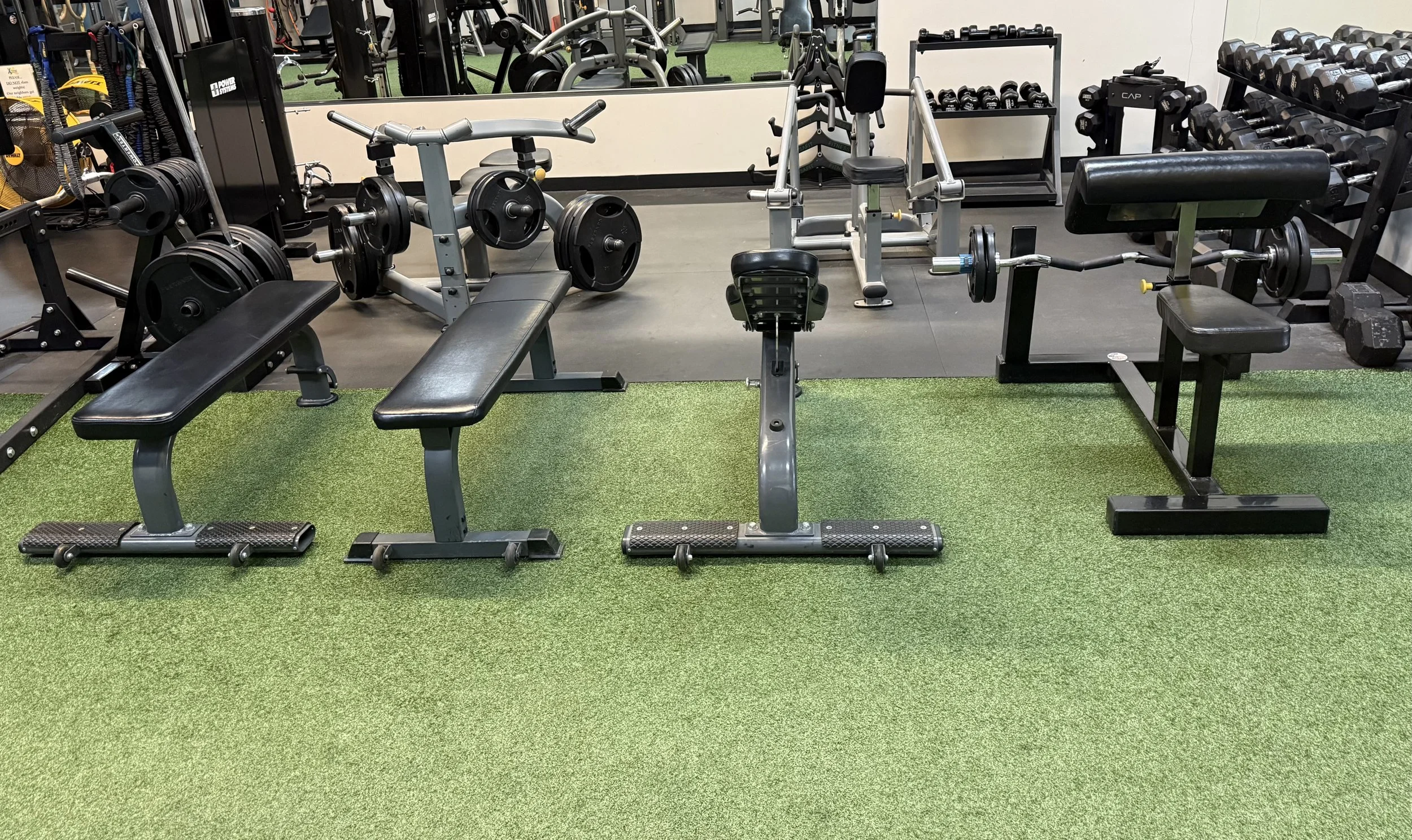
Intelligent Training for High-Performing Lives
Custom strength coaching built to improve capability, resilience, and long-term health. Train in a way that respects your body, your schedule, and the standards you hold for the rest of your life.
Our Approach
Training is not random exercise.
It is a strategic tool for building strength, function, resilience, and long-term capability — especially in demanding lives.
At Custom Fit Coaching, training is designed to work with your body, your history, and your reality — not against them.
Why Training Matters — Especially Now
As life becomes more demanding, training plays a larger role in:
Preserving muscle and strength
Supporting metabolism and insulin sensitivity
Improving resilience to stress
Protecting joints, posture, and movement quality
Increasing energy, confidence, and physical capacity
Supporting longevity and independence over time
In midlife, the stakes rise.
What once felt easy may no longer work the same way — not because you are broken, but because your body now requires a more intelligent approach.
Our role is to help you train in a way that is productive, sustainable, and appropriate for your physiology.
Context First. Always.
There is no universally “best” training plan.
Your training strategy must reflect:
Your current fitness level
Your injury history and movement patterns
Your schedule, workload, and stress load
Your recovery capacity
Your goals and priorities
Your preferences and non-negotiables
We do not force people into generic templates.
We build training plans around your actual body and actual life, so your program becomes something you can execute consistently — not something that looks good on paper and collapses in practice.
The Custom Fit Coaching Training Philosophy
Strength as a Foundation
Strength is not only about appearance.
It is a base quality that supports:
Better movement
Greater resilience
Improved metabolic health
More confidence in daily life
Greater capacity for work, recreation, and aging well
We train for capability first. Aesthetics are welcome, but they are not the sole objective.
Precision Over Punishment
More is not always better. Harder is not always smarter.
We prioritize:
Appropriate exercise selection
High-quality execution
Intelligent progression
Enough stimulus to create adaptation
Enough restraint to support recovery
Training should challenge you, not break trust with your body.
Individual Mechanics Matter
Not every body is built to move the same way.
We account for:
Structure
Mobility restrictions
Stability needs
Asymmetries
Pain history
Exercise tolerance
That means one person may thrive with trap bar deadlifts, while another does better with kettlebells, split squats, carries, or supported variations.
The goal is not to force standardization.
The goal is to find what works.
Nervous System and Recovery Matter
A good training plan respects more than muscles.
It must also respect:
Stress physiology
Recovery bandwidth
Sleep quality
Lifestyle demands
Mental load
The body does not separate work stress, poor sleep, and training stress into neat little categories. We program accordingly.
Progression Over Novelty
Effective training does not require constant variety.
It requires:
Clear structure
Repeated exposure
Measurable progress
Thoughtful adjustment over time
We use novelty sparingly and purposefully.
The focus is on getting better, not just staying entertained.
Common Training Myths We Don’t Subscribe To
“You need to crush yourself to get results”
“Soreness means the workout worked”
“More sweat equals more progress”
“There is one best exercise for everyone”
“Pain is just weakness leaving the body”
These ideas may sound intense, but intensity without intelligence often leads to inconsistency, frustration, or injury. Our work is about durable progress, not ego-driven training.
What This Looks Like in Practice
While every program is individualized, training strategies often include:
Strength work built around your structure and goals
Movement choices that respect your joints and mechanics
Progression frameworks that are clear and sustainable
Core stability and positional control where needed
Conditioning used strategically, not excessively
Recovery-aware programming that fits real life
No fluff.
No random circuits.
No generic punishment sessions.
Just intelligent training with purpose.
Outcomes Clients Commonly Experience
Improved strength and confidence
Better movement quality and body awareness
Reduced aches from poor exercise selection, overtraining, or lifestyle
Greater consistency and follow-through
Improved body composition over time
A stronger, more capable body that supports daily life and performance
Training becomes a source of momentum — not another stressor to manage.
Who This Approach Is For
This training approach is designed for people who:
Want a program built for their body, not the average body
Value logic, precision, and personalization
Want to get stronger without unnecessary wear and tear
Are willing to train with consistency and intention
See health and fitness as part of a bigger life mission
It is not for:
Random workouts without progression
One-size-fits-all programming
Punishment-based exercise
People looking to outsource all responsibility without engagement
Next Steps
Training at this level is never just about sets and reps.
It works best when integrated with recovery, stress management, nutrition, and lifestyle realities.
If you are ready for a more intelligent, individualized approach to strength and performance, the next step is a 60-minute Coaching Assessment / Placement Session to assess your current needs, discuss goals, and determine the most appropriate coaching path for you.
Your training should support the life you’re building. Not Compete with it.